Showing posts with label Concrete Canvas. Show all posts

Wednesday, August 10, 2011

Stitching concrete

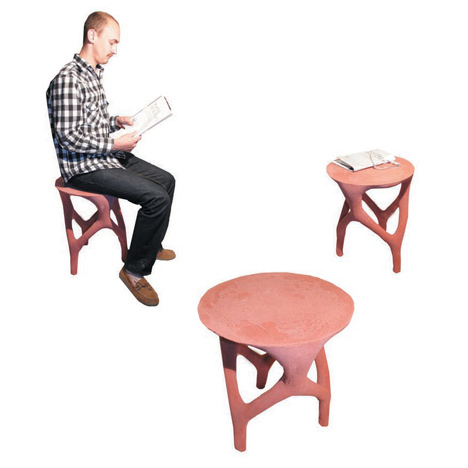
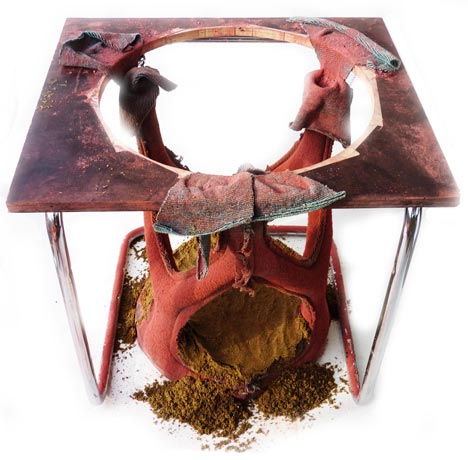
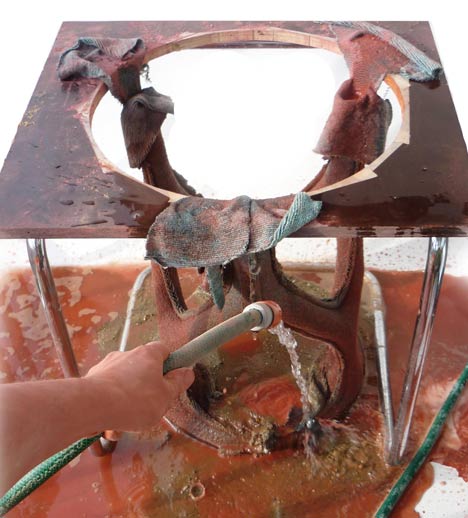
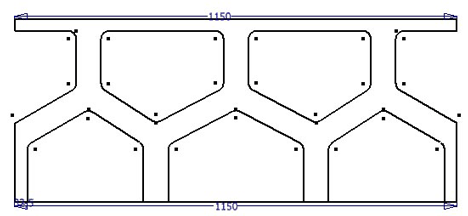
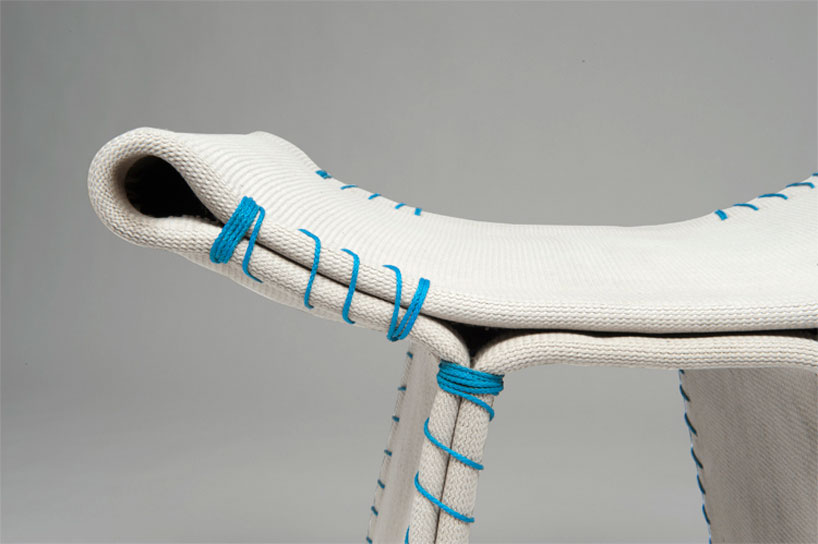
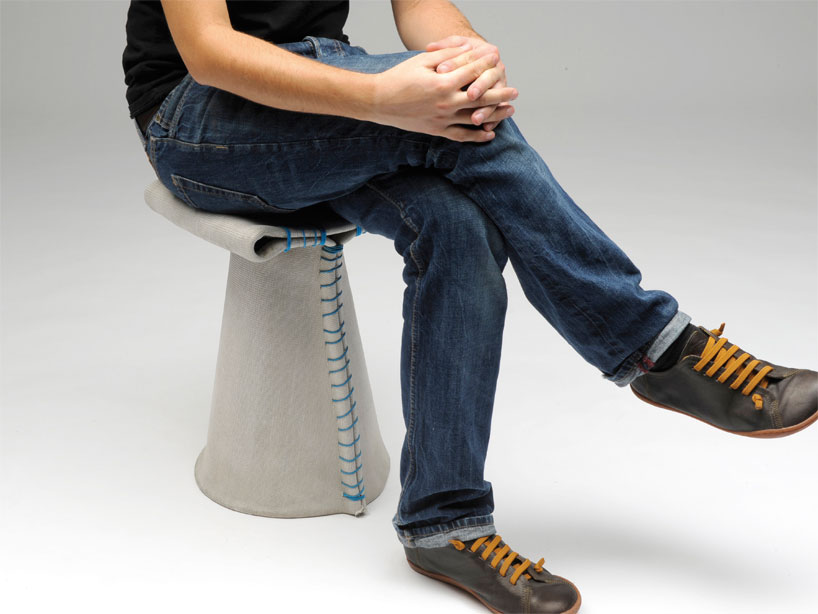
[Concrete Canvas is formed, stitched and watered - and you get a concrete stool. Via]
Furniture and especially chairs have a great scale to test new (or old) material principles at a manageable size and weight and stripped down to essential production details that mean much if not everything to the concept and tectonics of the piece. I enjoy as well how the stool has a recognizable function, the socalled affordance, that make you immediately judge even images based on your own bodily experience.


By now several concrete design pieces have made it to your Concretely blog - [just search 'chair' on this blog to check out a few]. German designer Florian Schmid's stool seem particularly tactile and the production principle is wonderfully easy to grasp.
Below project is via this post on Designboom.
"German designer Florian Schmid has developed 'stitching concrete', a project which has been influenced by the contrasts of the material Concrete Canvas
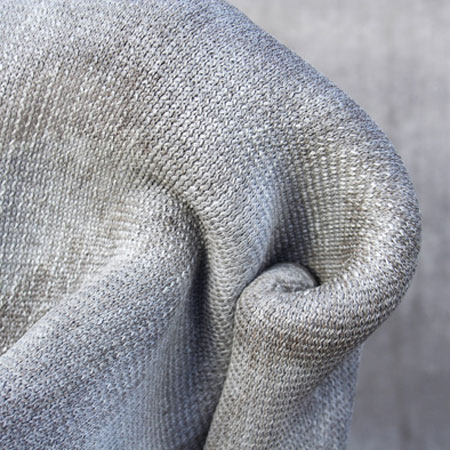
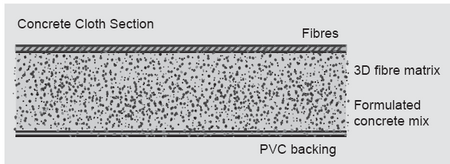
Concrete cloth is a flexible cement impregnated fabric that hardens on hydration to form a thin, durable water proof and fire proof concrete layer. it combines the softness and warmth of fabric with the stability of cold, hard concrete.
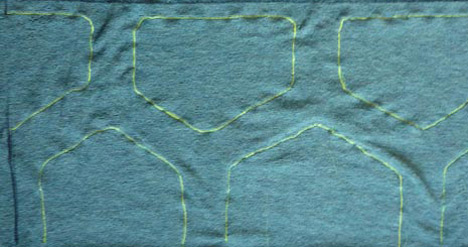
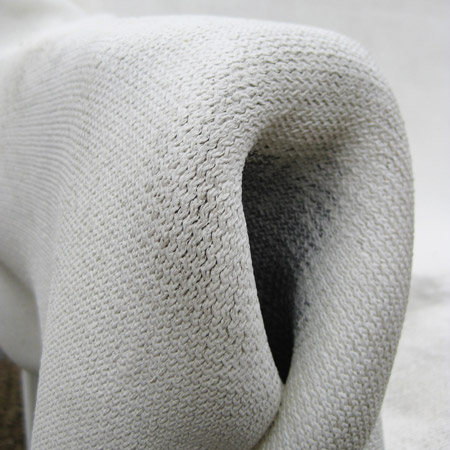
[It looks like felt but it's concrete. Via]
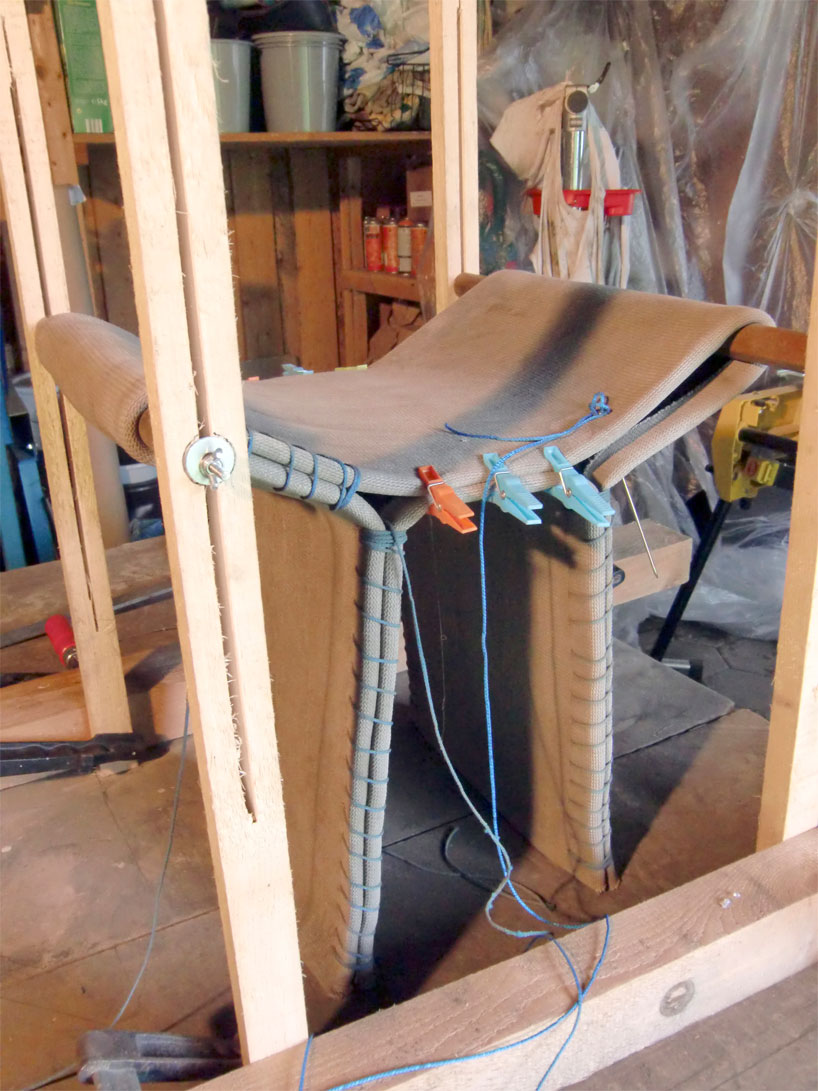
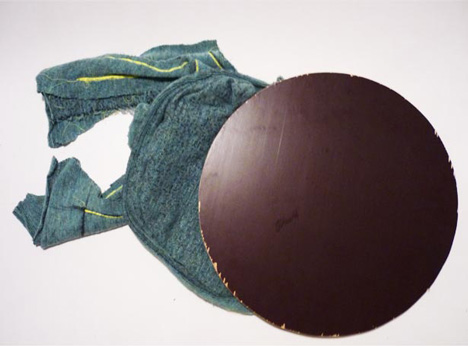
[A rig supports the textile structure as it is formed, sewn, watered and finally cured to be a concrete textile stool. Image via]
To create each stool, Schmid has built a special wooden rack that is used as a mould in which he forms the concrete canvas around it.
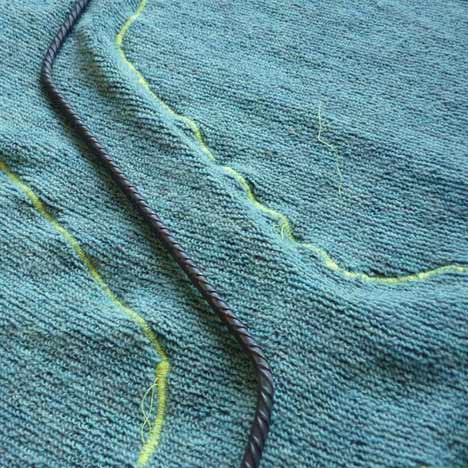
The device gives hold to the material during the watering and drying process in which the exposed seams are sewn together with either blue, red or yellow string providing extra stability and reinforcements. Once the stool is hardened, it can be removed from the mould, which always remains the same, but can be adjusted according to the different heights, lengths and widths of the objects."


I think I'll drape and sew myself a concrete summer cabin one of these days ;)
Concrete Canvas is introduced in my blog post 'Shake, drape and bake' here


Thanks, Diederik for sending the link

Friday, September 17, 2010

Shake, drape and bake - Concrete Canvas

[Concrete cloth is a concrete impregnated canvas, which you drape in shape you want - and then add water]

Following the post on a fabric formed side-table, I was reminded of Concrete Canvas - A textile impregnated with dry concrete mix - you shape the heavy canvas - and add water to activate the chemical binding process of the cement.
Like the Shake and Bake cake mix, you just add water

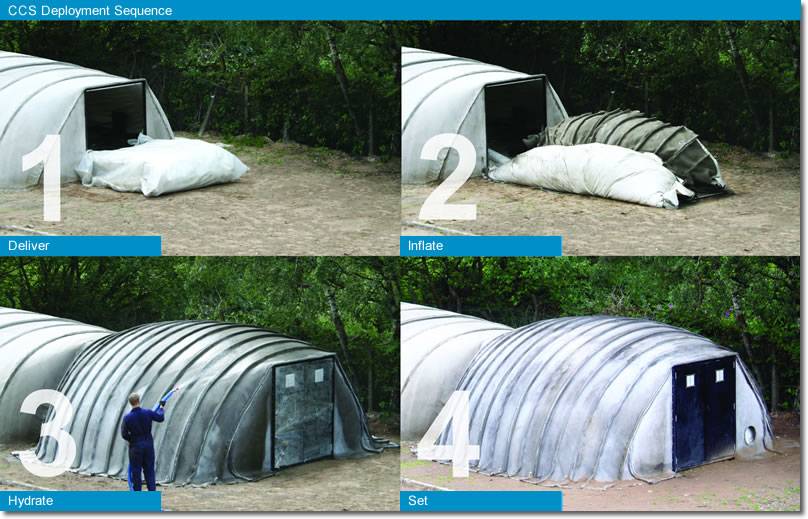
The clever idea was started for an idea of creating emergency shelters that would work as seen below.
Today the company have created a civil line of use and a military one. 
To erect the shelters, the inner liner is inflated via an electric fan. As the liner expands it lifts the concrete cloth into the Nissen hut shape, which is pegged out and the canvas is then hydrated with water or seawater. In 1 hour the structure is self-supporting and in 24 hours it’s ready to use
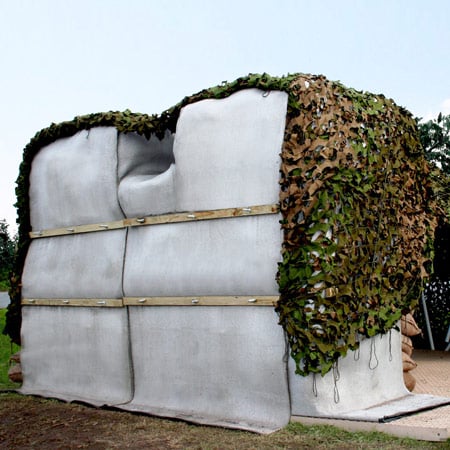
[Concrete Canvas is used by the British Army - concrete draped sandbags work well as protection against bullets]
I guess the fact that the military has started using Concrete Canvas is the proof of the great idea - I'm looking forward to seeing some more architectural and poetic uses of this 'shake, drape and bake' concept.

Concrete Canvas has been awarded several prizes - I think the company have received the Red Dot Award Last year the company received the Medium Material Award from Material Connexion.

Here's some text from the inauguration in November 2009:

"The award recognizes materials juried into the company’s Materials Library within the past year that demonstrate outstanding technological innovation and the potential to make a significant contribution to the advancement of design, industry, society and economy. 
“The MEDIUM Award for Material of the Year is an opportunity to celebrate the extraordinary breadth and scope of materials innovation today,” says George M. Beylerian, Founder & CEO of Material ConneXion. “The winner is distinguished not only for its technical ability, but for its capacity to make a lasting impact on our lives.”

"With the simple addition of water, Concrete Cloth makes it possible to create safe, durable, non-combustible structures for a wide range of commercial, military and humanitarian uses," 
said Dr. Andrew H. Dent, Vice President, Library & Materials Research at Material ConneXion.

"This innovation is especially remarkable for enabling the construction of rapidly deployable shelter and food storage structures in disaster relief situations," Dent added.

Fabric formed concrete side-table

[MASS |||| by Janwillem van Maele]

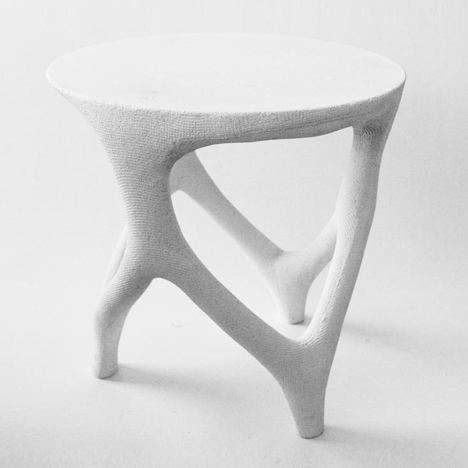
Here's an introduction to the production of a fabric formed concrete design piece, the thesis work of Janwillem van Maele aDe Hogeschool West-Vaanderen. The feeding of the DWG file to an automatic stitching of the fabric mold is the part to have in mind here - the pour is done by filling the form with dry concrete mix and then watering the form afterwards (see below images that tell the story well). 


Van Maele writes this (as communicated on the Dezeen Blog) The MASS |||| is a concrete sidetable with the following production process: "I started with a DWG file for the right shape of the legs. That file can be entered in an industrial embroidery machine. This is automatically sewn."


The pictures below go mostly without saying - in the bottom of the post is a reference to a product that uses a similar technique at a larger scale.
[Sand- I think it must be to tension the fabric and maintain the shape in place, that extra load is added]

[Water added to the filled fabric form. The water drenches the form and activates the cement inside]

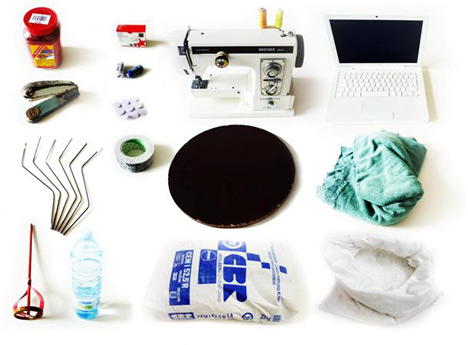
[Kit of parts to create the fabric formed concrete side-table]
[The DWG drawing of the unfolded fabric formwork]
[Tailored fabric formwork]
[Formwork before it's hung and filled]
[Reinforcement bars were pushed into the form when filled. I'm surprised if the concrete mix doesn't have fibres as well]

At a larger scale
The 'watering technique' resembles, in a smaller scale the ingenious product Concrete Canvas, which I just did a post on here:
[Concrete cloth is a concrete impregnated canvas, which you drape in shape you want - and then add water]
Materials used for the side-table:


Color Pigment, Staple, Iron Reinforcement, Mixer, Staples, Yarn, Tape, Water,Industrial embroidery machine, 15-layer crosswise glued birch veneer, shuttering plate, Portland cement, Computer, Textile, White sand, Cork