Sunday, September 25, 2011

The textile block - Lloyd Wright vs 3d printing

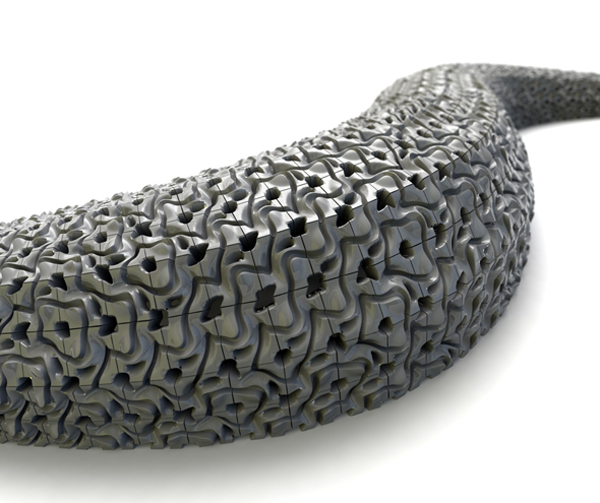
Here is what concrete could be - or is - if you include the ever expanding group cement based composites to your conception of 'concrete'. And better get used the look because 3d printing has never been cheaper and more available with this new fusible mix. SeatSlug is the first 3d Printed Bench at a Low Cost / Rael San Fratello Architects.

[Image of the G.M Millard House aka La Miniatura, the first of a series of houses where Wright explores the textile block. Via Coletta Design Blog.]

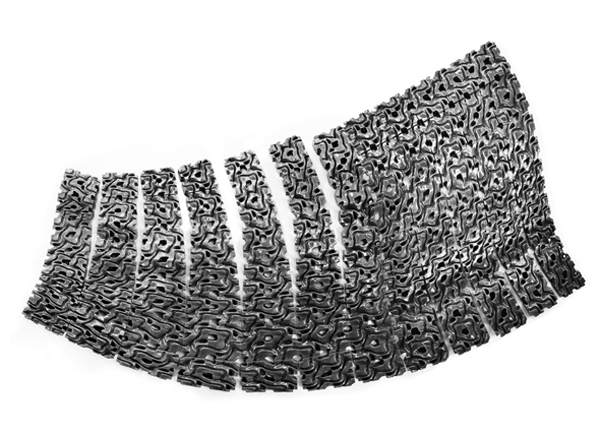
It is also quite the take on the 'textile block', the concrete unit developed by Frank Lloyd Wright for La Miniatura and a series of houses where he explored this notion of a 'machine produced concrete block', perfect like an industrially produced fabric. This particular notion of 'textile concrete' also has quite new perspectives for architecture in the light of the 3d printed project. The 'textile surface' of the SeatSlug is comprised of 230 individual pieces. The textile elements printed for the bench makes me wonder into which form Lloyd Wright's La Miniatura would have been 'printed' today?

Below is via stumpleupon
The cement based polymer has a compression strength of 4700 pounds but cost up to 90% less than conventional fusible powders. Rapid 3d printing technologies have been traditionally used to create relatively expensive prototypes for industrial design or more recently small scale objects with low cost devices.
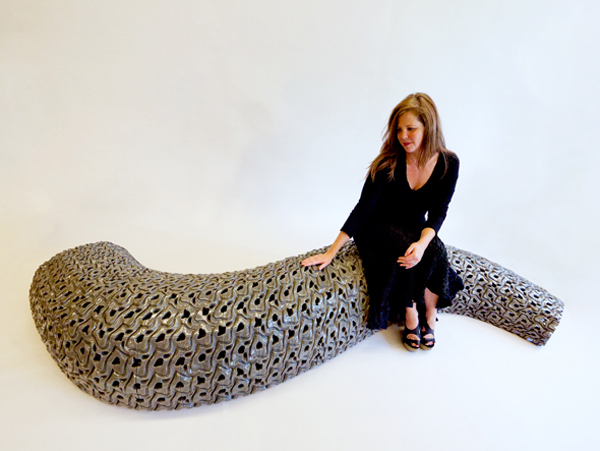


The promise of 3d printing for usable mass consumed objects seem to have been just around the corner for nearly a decade now. A new formulation cement-based polymer developed by Rael San Fratello Architects in partnership with the University of Washington and University of California Berkeley replaces more expensive powder mediums for large scale objects. The prototype SeatSlug bench is a demonstration project of the potential of the material and 3d printing process to make sophisticated large pieces using low cost, non repetitive objects. The bench is comprised of 230 individual pieces, each developed as a unique shape.
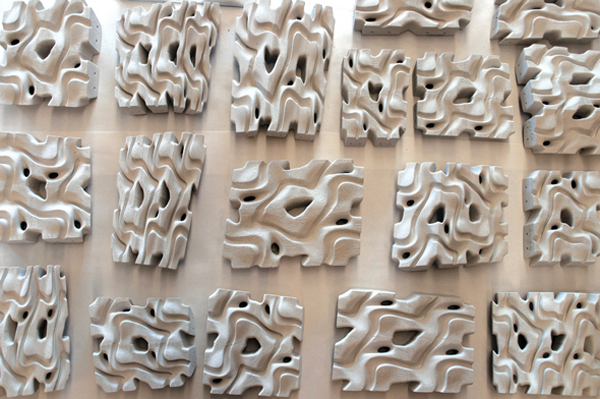

The SeatSlug is based on the shape of the recently discovered flabellina goddardi sea slug and surface inspired by karakusamon patterns, traditional Japanese designs. The unique shape is both functional and collectable with its provocative massing and highly polished finish, possibly with an eye to be built individually for higher end furniture stores or galleries. The manufacture of large scale merchandise as low cost printed objects with hand assembly near the end user addresses the issues of scale and cost of high quality products, which are often not available to market due to restraints in supply and demand.

Via stumpleupon

Wednesday, August 10, 2011

Stitching concrete

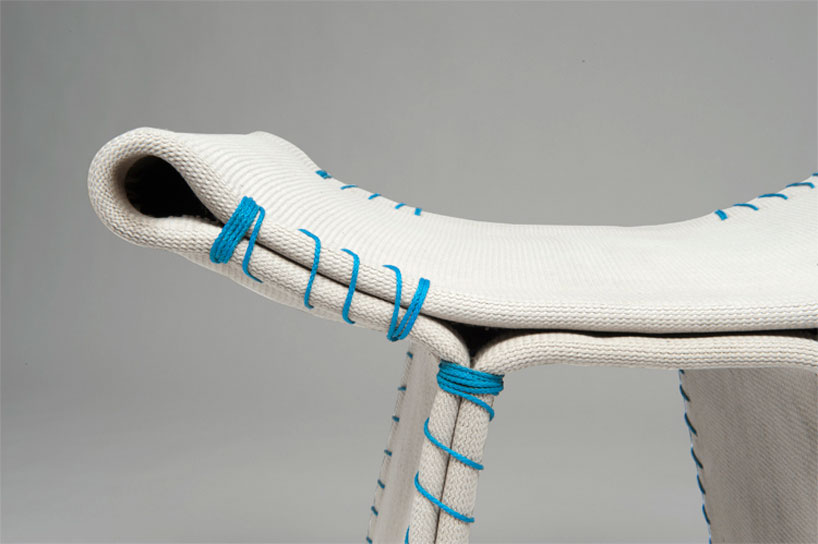
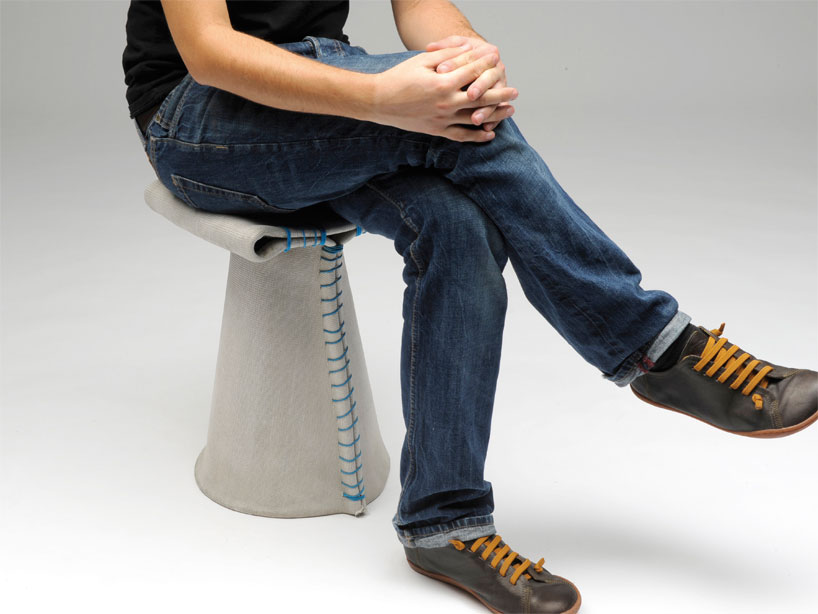
[Concrete Canvas is formed, stitched and watered - and you get a concrete stool. Via]
Furniture and especially chairs have a great scale to test new (or old) material principles at a manageable size and weight and stripped down to essential production details that mean much if not everything to the concept and tectonics of the piece. I enjoy as well how the stool has a recognizable function, the socalled affordance, that make you immediately judge even images based on your own bodily experience.


By now several concrete design pieces have made it to your Concretely blog - [just search 'chair' on this blog to check out a few]. German designer Florian Schmid's stool seem particularly tactile and the production principle is wonderfully easy to grasp.
Below project is via this post on Designboom.
"German designer Florian Schmid has developed 'stitching concrete', a project which has been influenced by the contrasts of the material Concrete Canvas. 
Concrete cloth is a flexible cement impregnated fabric that hardens on hydration to form a thin, durable water proof and fire proof concrete layer. it combines the softness and warmth of fabric with the stability of cold, hard concrete.
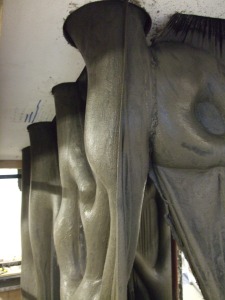
[It looks like felt but it's concrete. Via]
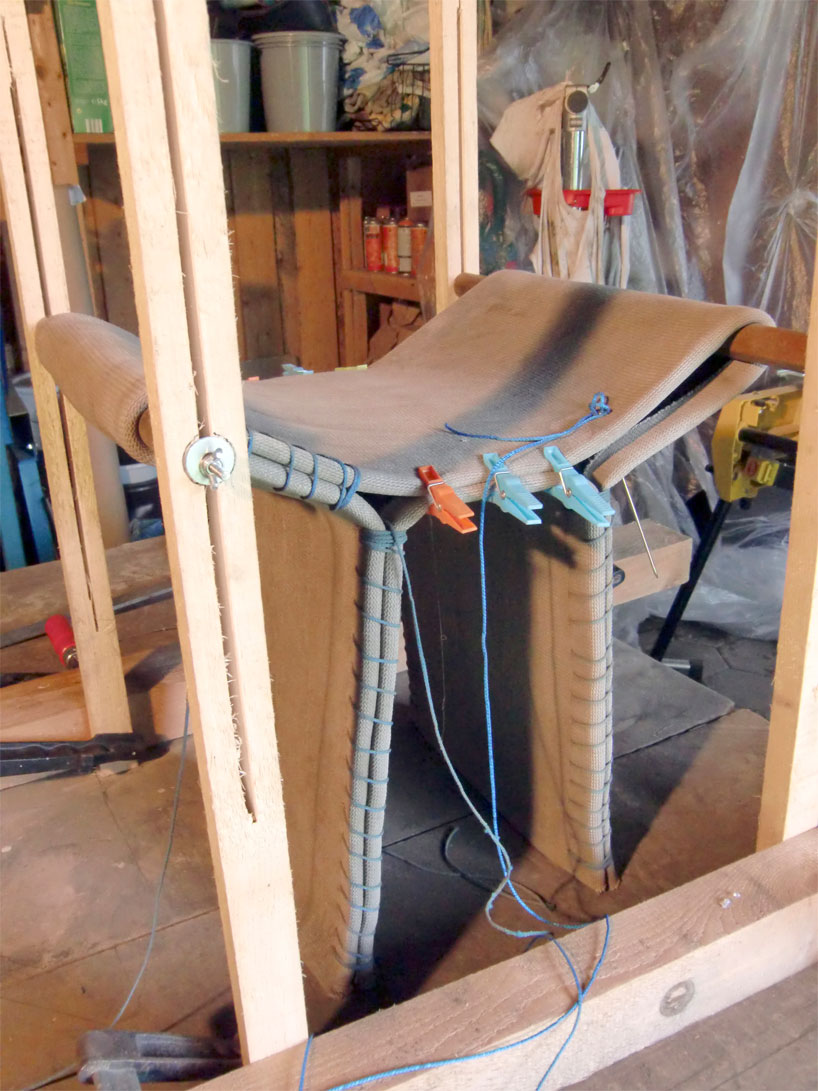
[A rig supports the textile structure as it is formed, sewn, watered and finally cured to be a concrete textile stool. Image via]
To create each stool, Schmid has built a special wooden rack that is used as a mould in which he forms the concrete canvas around it.
The device gives hold to the material during the watering and drying process in which the exposed seams are sewn together with either blue, red or yellow string providing extra stability and reinforcements. Once the stool is hardened, it can be removed from the mould, which always remains the same, but can be adjusted according to the different heights, lengths and widths of the objects."


I think I'll drape and sew myself a concrete summer cabin one of these days ;)
Concrete Canvas is introduced in my blog post 'Shake, drape and bake' here


Thanks, Diederik for sending the link

Tuesday, July 19, 2011

Skating superparks and swimming pools

[Scroll through the images below to get to a cool movie I just came across - 
A hint: this image is from California Is a Place]
This post features skaters, or rather two quite different concrete landscapes...
Last month a really large skatepark opened in the public Copenhagen park called Fælledparken. - the project was carried out as collaboration between Copenhagen Skatepark and the city of Copenhagen.
Besides watching the talented skaters who finally have a serious place to do their stuff, your concretely blogger must admire the craftsmanship involved in concreting the smooth concrete landscape.
[Image from Fælledparken Skate Park,
Photo: 
Lasse Kofod from this site]
[From the construction of the Fælledparken Skatepark. Photo from Copenhagen Skatepark]
[poster for the opening of the skatepark]

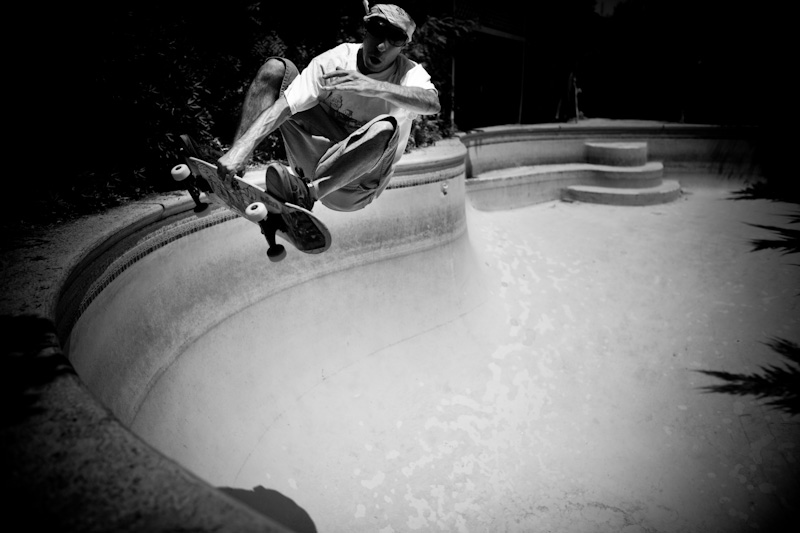
The blue surface painted on the poster above clearly resembles the water of a gigantic swimming pool. The short movie "The Cannonball" has beautifully gray images of empty swimming pools in Californian suburbia as the venues for a group of skaters who may be among the few who see an opportunity in the financial crisis of the recent years, which have caused foreclosures - and lots of empty pools for these pool skaters to 'surf' in Fresno, California. The concrete reality here is, of course that the empty pools are such clear symbols of the situation; loans that were taken (and offered, of course), as well as just plain overspending. - sigh...
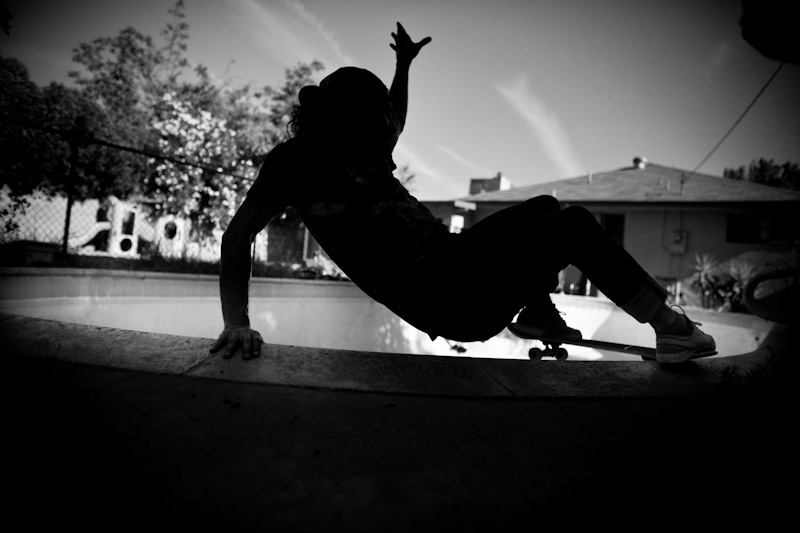
[Image of skater by the pool... so to speak, from the California is a Place blog]
Through the skaters, the movie brings an interesting optics on the recession and on the foreclosure monster as the directors call it on the web site for a whole series of Californian stories - and on this eye for discovering concrete landscaping for four little wheels.

The movie was directed, produced, and shot by Drea Cooper and Zackary Canepari.
Without further ado - do watch the movie.

Blog reports processes of fabric forming

I just came across this fine blog by architecture student Richard Bush that collects reflections and and procedures of a group student project about fabric formed concrete at  ESALA (Edinburgh School of Architecture and Landscape Architecture).
[Image of the filled fabric formwork. Image from the blog]

[See the 2 minute video of the entire construction process of a fabric formed concrete structure]

As the blogger Richard Bush has written:
"In the context of our unit’s title Distructive Technology: Material Immaterial – the discussion that formed a critical part of our design process, that now only exists as notes and sketches, represents an immaterial property of a material concrete structure. In the process we have developed a language, a code, to work with this material and discuss its process and potential wtih other people. We have developed an understanding between material and immaterial."


[Image of tailored fabric formwork ready for hanging. Image from the blog]

One of the supervisors of the 5 week student projects at University of Edinburgh is Professor Remo Pedreschi who has edited this great book about fabric formwork along with Alan Chandler.

The first book about Fabric Formwork

I just posted the news of an upcoming book that features fabric formwork. I realize that I ought to share with you this book, the first book about Fabric formwork for concrete, I believe; and that is the title as well, "Fabric Formwork" (2007).
[The cover of "Fabric Formwork" by Chandler & Pedreschi, (eds.). Image from RIBA Bookshop]

The book, published by RIBA Publishing, is not the first publication that features concrete structure cast in fabrics - books about Felix Candela or Christopher Alexander has shell structures cast on suspended burlap. This book I believe however to be the first dedicated to the subject of fabric forming - and it is the first to collect reflections upon the contemporary research in the use of modern textile technologies and concrete.

The book consists of six essays about different aspects of fabric forming, from research methodologies, technical aspects, how to apply an aesthetics of concrete cast in textile as well as a discussion of the possible future of fabric formed concrete in construction.
[Image of 'Wall One', the result of a workshop project done at University of East London and discussed in the book. The image is from a great blog post collecting projects with 'Fluid Aggregates' by Katie Yash]

Despite lots of wonderful images and sketches, this is not your usual coffee table book. - just the fact that one of the more theoretical essays is entitled the Beautiful, the Sublime and the Ugly, which is an attempt to embrace the aesthetic appreciation between extremes in formal and structural expressions in concrete cast in textiles.

The editors of Fabric Formwork are prize winning researcher - Remo Pedreschi of the University of Edinburgh, and Alan Chandler of the University of East London.
The two have collaborated on research projects into fabric formwork and following the publication of the book back in 2007, Chandler & Pedreschi received the RIBA President’s Awards for Research 2008.

Fabric formed concrete chair in print

It's summer and I'm trying to finish writing my thesis on fabric formwork - it's hard work - but something look forward to while working is the launch of a design book that features my Ambiguous concrete chair.
The cover of DIY Furniture, image from the publisher

"DIY Furniture: A Step-by-Step Guide" is edited by Christopher Stuart. Chris has worked hard in getting all the designs together and to finish the book - I'm proud to be included and i can't wait to see the result.


The publisher Laurence King Publishing writes about the book:
"Featuring 30 designs by leading designer-makers from around the world DIY Furniture shows you how to use simple techniques to make stunning designer furniture from scratch. 


Along with designs for seating and storage, the book also features projects for making your own bed, wardrobe, lighting and garden furniture. Each project features hand-drawn diagrams with short, easy-to-follow instructions on how to build the piece. 


All the projects can be easily assembled using common materials to be found at the local hardware store, allowing the reader to create unique designer pieces at a fraction of the normal cost. Brief biographies of all the featured designers are included at the end of the book"

The chair will be among 30 designs that you can make yourself - I bet the concrete chair will be the heaviest of them all.
The Ambiguous Chair - se more images here
Detail of Ambiguous Chair cast in fabric formwork.
Please, do share with me if you get inspired to make your own fabric formed concrete furniture.
Info about the publication:
Paperback
270 illustrations
144 pages
245 x 210 mm
ISBN 978 1 85669 742 2
£17.95
Published by Laurence King Publishing, October 2011

Tuesday, July 12, 2011

Lecture by Mark West

Mark West is the founder of the Center for Architectural Structures and Technology (CAST) at the University of Manitoba, Canada.
West is a pioneer of contemporary research into fabric formed concrete; recently he gave a lecture at ETH, Zürich hosted by the Block reseach group. Thanks to PhD-scholar and engineer Diederik Veenendaal who has sent me the link to the lecture on You Tube.
Above is the link to Mark West's lecture at ETH