Wednesday, December 21, 2011

Floating Concrete- Weaving Shores

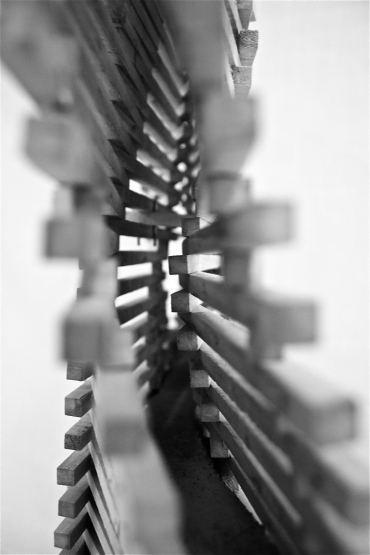
Weaving Shores Kissing Buoy is a studio project from the course Formworks at Columbia University that I introduced here. 
[Concept of floating concrete buys in Weaving Shores Kissing Buoy, via]

The project is a concrete buoy that becomes part of a woven landscape on the shore of the East River in Greenpoint, Brooklyn. It responses to the workshop brief to produce 1 and 2 part molds and design a concrete element system that incorporates the specific elements and mode of construction.

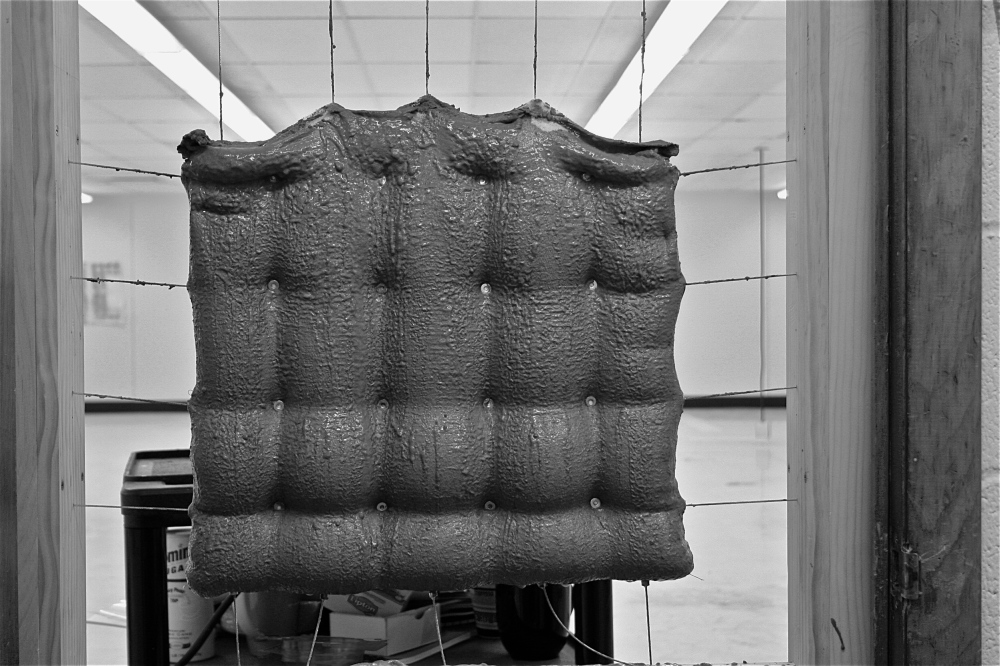
[Concrete Prototype, Weaving Shores Kissing Buoy, via]
The concept and the production of a concrete element that floats and interlocks into a 'woven,' walkable, and physically flexible system is a great way to get many parameters at play during the course.

The presentation is also inspirational because of the introduction to reference works and technologies.
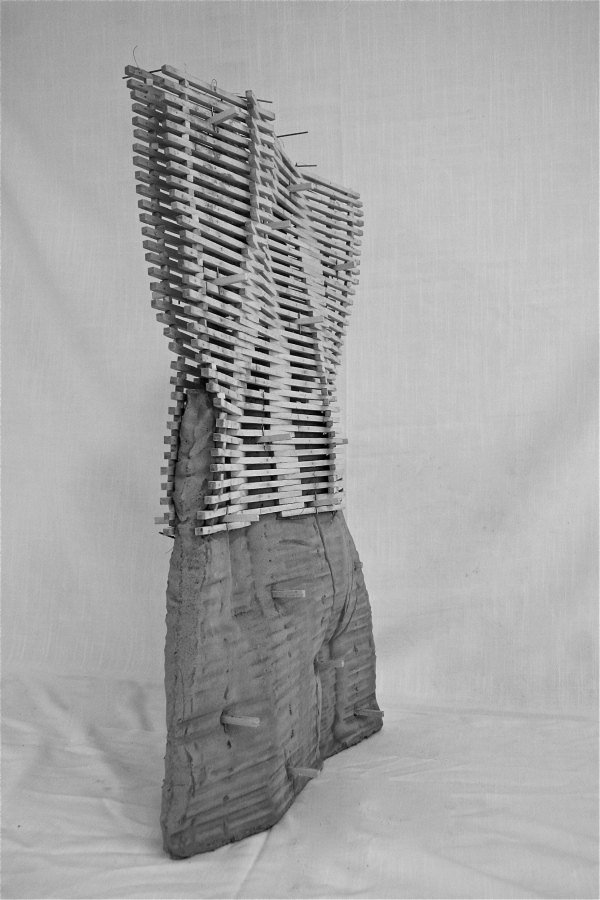
[Weaving Shores Kissing Buoy, via]
The idea of fabricating concrete shores is not really that intriguing to me. Giving it a second thought, the need to respond to the rising seas on our warm Globe calls for drastic measures to create adaptable shores. The project also suggests a combination of human recreation and an artificial 'aquatic habitat.'
[Reef Balls, artificial concrete reefs, via]

One of the project's references is work by the Reef Ball Foundation, which is a simple concrete forming method to produce artificial reefs. The aim is to create an  aquatic habitat for the animals and plants who become homeless due to drastic methods of fishing. The concrete reef also works to protect existing natural reefs.

Weaving Shore Kissing Buoy by students: Aisha Alsager, Joanne Hayek, Anne Wei, and Bernadette Ma.

Formworks at Columbia

Formworks is a course taught at GSAPP, Columbia by my new formwork friend Joshua Draper (yes, it is a very cool last name these days, what?).
[JAJI Noise Continuum, via]

Since 2008 the studio class has hybridized methods of casting with digital fabrication
"The ambition is to challenge the repetitive nature of casting and formwork by developing a parametric, dynamic formworks system and produce a series of precast elements using that system. 

Organized around a series of short but intense assignments, students are introduced to 1 and 2 part molds, silicone casting, vacuforming, rotational molding and a variety of casting materials. Students respond with their own system which takes these techniques and systems of organization, assembly and fabrication further." Via


[JAJI is a project that investigates the role of the milling direction(s) in creating form and surface pattern. via]


JAJI project by students: Jennifer Chang, Aaron Berman, Juan Fransisco Saldarriaga, and Idan Naor.


See presentations of work by the Formworks classes:
formworksfa11.blogspot.com
formworksspr11.blogspot.com
formworksfa10.blogspot.com
formworksspr10.blogspot.com
formworksfa09.blogspot.com
formworksspr09.blogspot.com
formworksfa08.blogspot.com
formworkssum08.blogspot.com 

Flex Form by Allison Adderley

Building Matters is a blog compiled around the wonderful experimental thesis work of permanent, flexible formwork of Allison Adderley, architecture student at the University of Buffalo in the state of New York.
[Flex Form via]

"Typically, formwork is understood as a temporary building element, often being discarded and seen only as a construction tool, rarely a component of the final design.  This proposal explores the opportunity of employing formwork as a permanent building element, thus incorporating the formal elements inherent in building within the final form itself," Adderley states
[A very 'textile' formwork principle for a permanent formwork principle, "Flex Form" via]

Some of Adderley's formwork principles are permanent, and some 'just' leaves a permanent, formal consequence of the construction principles behind the formwork structure. I share this interest with Adderley in practices of molding and the relation between the mold and that which is molded. Basically, what I like to call 'formwork tectonics.'

Adderley introduces her abstract and theoretical references, Gottfried Semper, Kenneth Frampton, and Gework Hartoonian, and how she uses these theories. In this sense, find inspiration in the blog as a nice way to present rigorous, experimental and poetic work.

Semper's theories of the transformation of textile principles to methods of 'weaving' and 'dressing' facades are evident in the above experiment.

There is also a nice gallery of photos from a visit to the laboratory of CAST at the University of Manitoba. Adderley is obviously inspired by the work at CAST but has found her own way of investigating the roles of the fabric in formwork for concrete.
[Formwork detail, Series3 - Permanent Fabric (Suspension) via]
[Casting Series3 - Permanent Fabric (Suspension) via]

A goal in the abstract is to end the thesis work with a full scale cast, so more appears to come on the blog.
 Allison, I hope to see you at the ICFF2012 (World's Second International Conference of Fabric Formwork) in Bath, (UK) June 2012 :)

Sunday, September 25, 2011

The textile block - Lloyd Wright vs 3d printing

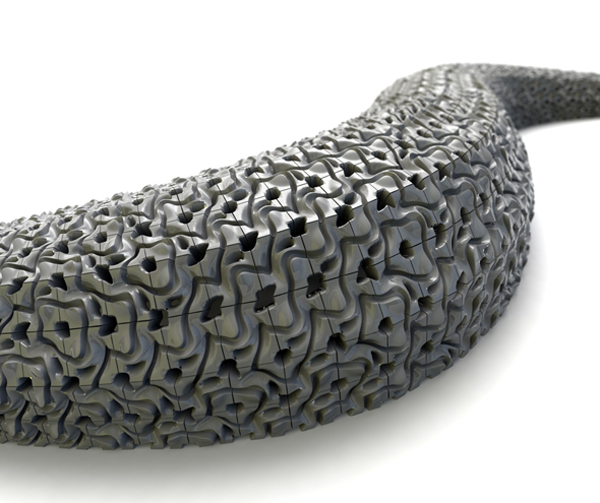
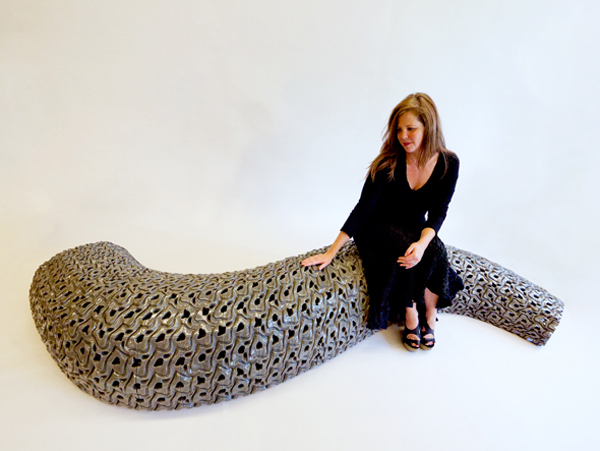
Here is what concrete could be - or is - if you include the ever expanding group cement based composites to your conception of 'concrete'. And better get used the look because 3d printing has never been cheaper and more available with this new fusible mix. SeatSlug is the first 3d Printed Bench at a Low Cost / Rael San Fratello Architects.

[Image of the G.M Millard House aka La Miniatura, the first of a series of houses where Wright explores the textile block. Via Coletta Design Blog.]

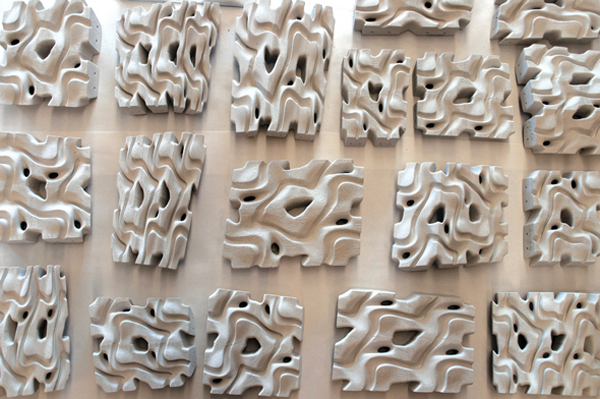
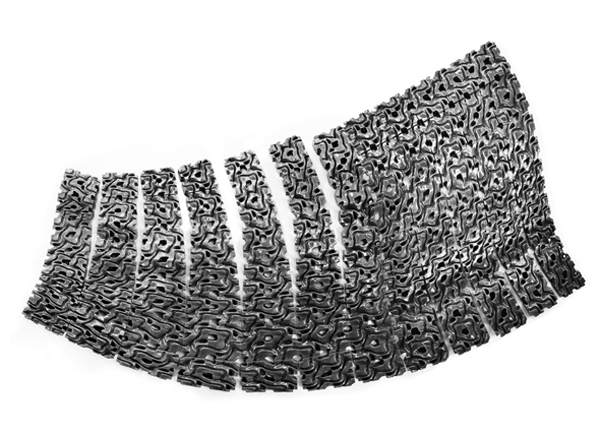
It is also quite the take on the 'textile block', the concrete unit developed by Frank Lloyd Wright for La Miniatura and a series of houses where he explored this notion of a 'machine produced concrete block', perfect like an industrially produced fabric. This particular notion of 'textile concrete' also has quite new perspectives for architecture in the light of the 3d printed project. The 'textile surface' of the SeatSlug is comprised of 230 individual pieces. The textile elements printed for the bench makes me wonder into which form Lloyd Wright's La Miniatura would have been 'printed' today?

Below is via stumpleupon
The cement based polymer has a compression strength of 4700 pounds but cost up to 90% less than conventional fusible powders. Rapid 3d printing technologies have been traditionally used to create relatively expensive prototypes for industrial design or more recently small scale objects with low cost devices.


The promise of 3d printing for usable mass consumed objects seem to have been just around the corner for nearly a decade now. A new formulation cement-based polymer developed by Rael San Fratello Architects in partnership with the University of Washington and University of California Berkeley replaces more expensive powder mediums for large scale objects. The prototype SeatSlug bench is a demonstration project of the potential of the material and 3d printing process to make sophisticated large pieces using low cost, non repetitive objects. The bench is comprised of 230 individual pieces, each developed as a unique shape.


The SeatSlug is based on the shape of the recently discovered flabellina goddardi sea slug and surface inspired by karakusamon patterns, traditional Japanese designs. The unique shape is both functional and collectable with its provocative massing and highly polished finish, possibly with an eye to be built individually for higher end furniture stores or galleries. The manufacture of large scale merchandise as low cost printed objects with hand assembly near the end user addresses the issues of scale and cost of high quality products, which are often not available to market due to restraints in supply and demand.


Via stumpleupon

Wednesday, August 10, 2011

Stitching concrete

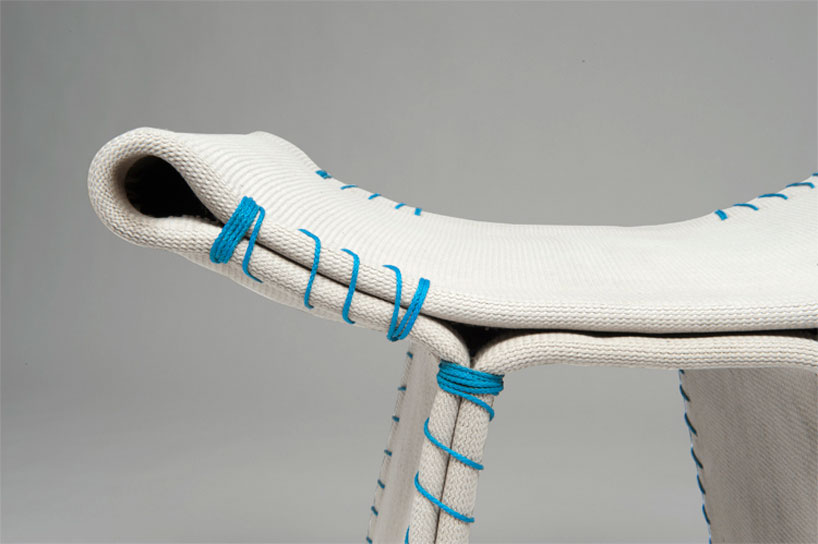
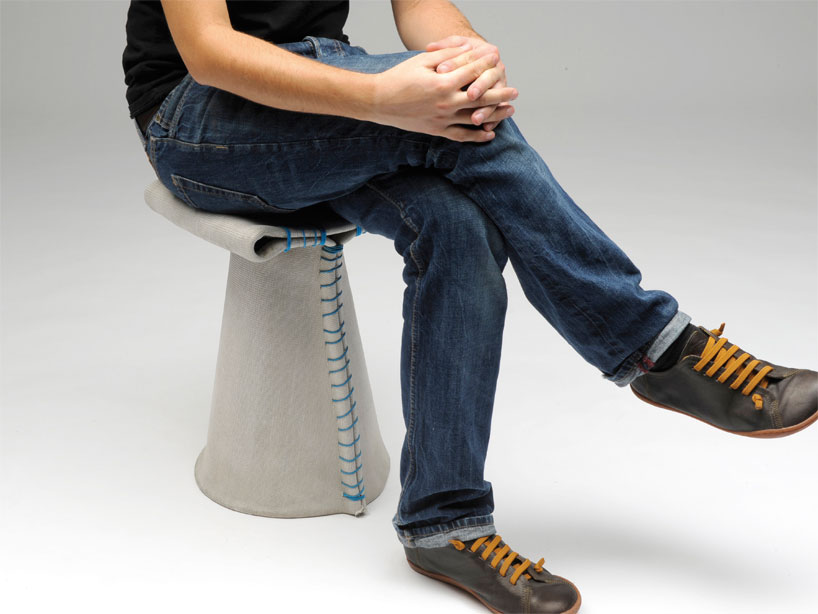
[Concrete Canvas is formed, stitched and watered - and you get a concrete stool. Via]
Furniture and especially chairs have a great scale to test new (or old) material principles at a manageable size and weight and stripped down to essential production details that mean much if not everything to the concept and tectonics of the piece. I enjoy as well how the stool has a recognizable function, the socalled affordance, that make you immediately judge even images based on your own bodily experience.


By now several concrete design pieces have made it to your Concretely blog - [just search 'chair' on this blog to check out a few]. German designer Florian Schmid's stool seem particularly tactile and the production principle is wonderfully easy to grasp.
Below project is via this post on Designboom.
"German designer Florian Schmid has developed 'stitching concrete', a project which has been influenced by the contrasts of the material Concrete Canvas. 
Concrete cloth is a flexible cement impregnated fabric that hardens on hydration to form a thin, durable water proof and fire proof concrete layer. it combines the softness and warmth of fabric with the stability of cold, hard concrete.
[It looks like felt but it's concrete. Via]
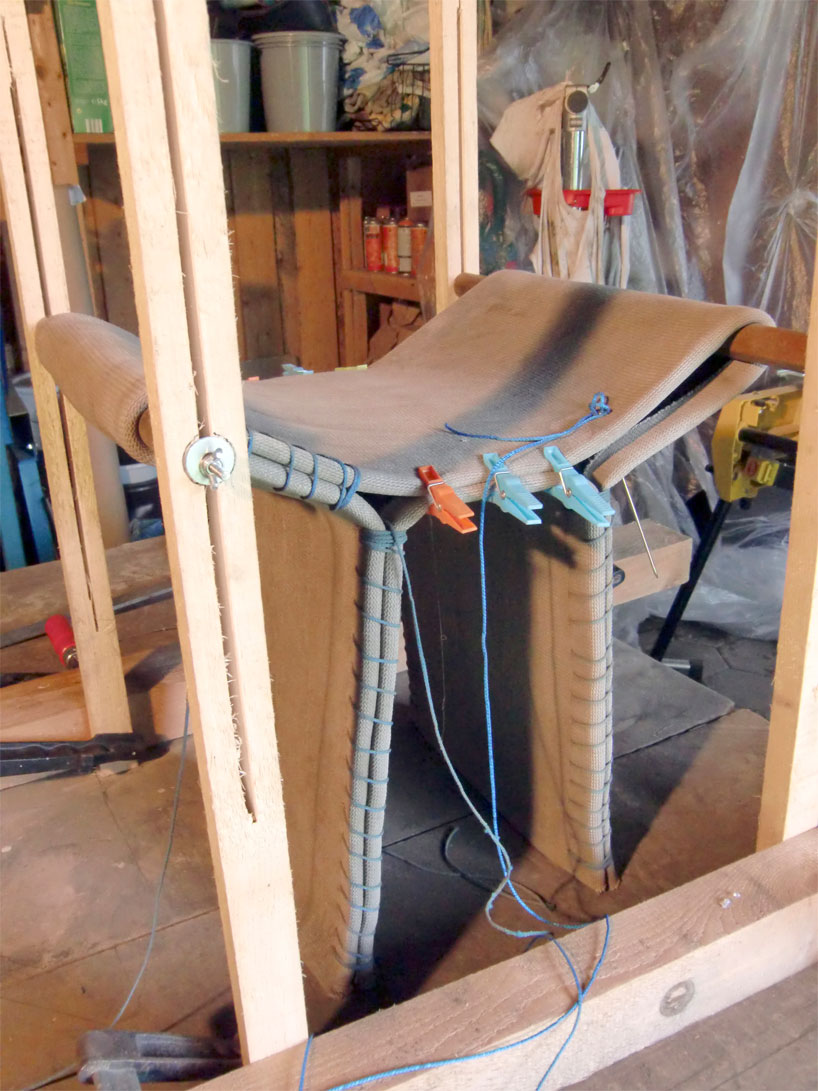
[A rig supports the textile structure as it is formed, sewn, watered and finally cured to be a concrete textile stool. Image via]
To create each stool, Schmid has built a special wooden rack that is used as a mould in which he forms the concrete canvas around it.
The device gives hold to the material during the watering and drying process in which the exposed seams are sewn together with either blue, red or yellow string providing extra stability and reinforcements. Once the stool is hardened, it can be removed from the mould, which always remains the same, but can be adjusted according to the different heights, lengths and widths of the objects."


I think I'll drape and sew myself a concrete summer cabin one of these days ;)
Concrete Canvas is introduced in my blog post 'Shake, drape and bake' here


Thanks, Diederik for sending the link

Tuesday, July 19, 2011

Skating superparks and swimming pools

[Scroll through the images below to get to a cool movie I just came across - 
A hint: this image is from California Is a Place]
This post features skaters, or rather two quite different concrete landscapes...
Last month a really large skatepark opened in the public Copenhagen park called Fælledparken. - the project was carried out as collaboration between Copenhagen Skatepark and the city of Copenhagen.
Besides watching the talented skaters who finally have a serious place to do their stuff, your concretely blogger must admire the craftsmanship involved in concreting the smooth concrete landscape.
[Image from Fælledparken Skate Park,
Photo: 
Lasse Kofod from this site]
[From the construction of the Fælledparken Skatepark. Photo from Copenhagen Skatepark]
[poster for the opening of the skatepark]

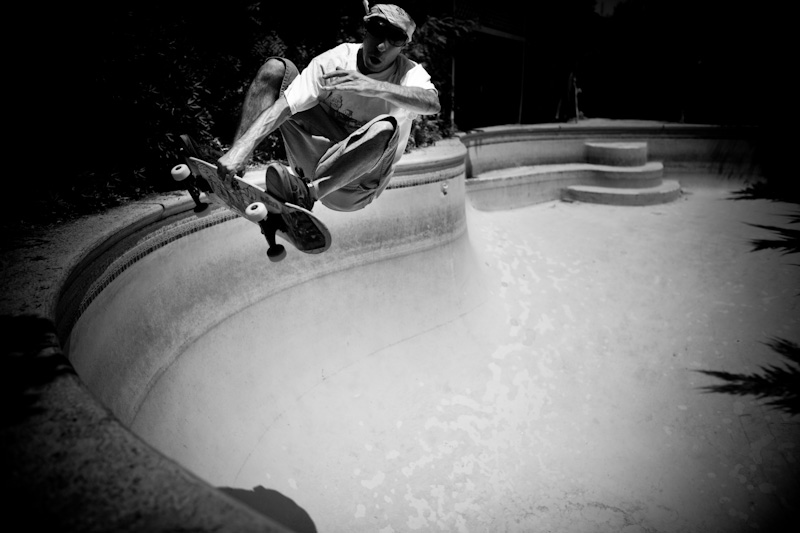
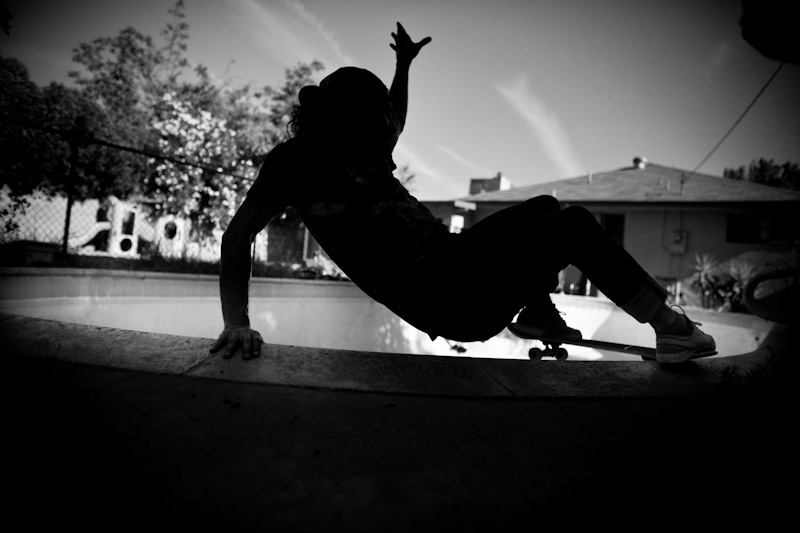
The blue surface painted on the poster above clearly resembles the water of a gigantic swimming pool. The short movie "The Cannonball" has beautifully gray images of empty swimming pools in Californian suburbia as the venues for a group of skaters who may be among the few who see an opportunity in the financial crisis of the recent years, which have caused foreclosures - and lots of empty pools for these pool skaters to 'surf' in Fresno, California. The concrete reality here is, of course that the empty pools are such clear symbols of the situation; loans that were taken (and offered, of course), as well as just plain overspending. - sigh...
[Image of skater by the pool... so to speak, from the California is a Place blog]
Through the skaters, the movie brings an interesting optics on the recession and on the foreclosure monster as the directors call it on the web site for a whole series of Californian stories - and on this eye for discovering concrete landscaping for four little wheels.

The movie was directed, produced, and shot by Drea Cooper and Zackary Canepari.
Without further ado - do watch the movie.

Blog reports processes of fabric forming

I just came across this fine blog by architecture student Richard Bush that collects reflections and and procedures of a group student project about fabric formed concrete at  ESALA (Edinburgh School of Architecture and Landscape Architecture).
[Image of the filled fabric formwork. Image from the blog]

[See the 2 minute video of the entire construction process of a fabric formed concrete structure]

As the blogger Richard Bush has written:
"In the context of our unit’s title Distructive Technology: Material Immaterial – the discussion that formed a critical part of our design process, that now only exists as notes and sketches, represents an immaterial property of a material concrete structure. In the process we have developed a language, a code, to work with this material and discuss its process and potential wtih other people. We have developed an understanding between material and immaterial."


[Image of tailored fabric formwork ready for hanging. Image from the blog]

One of the supervisors of the 5 week student projects at University of Edinburgh is Professor Remo Pedreschi who has edited this great book about fabric formwork along with Alan Chandler.